

The Tahitian Pearl, a Treasure of the Polynesian Lagoons
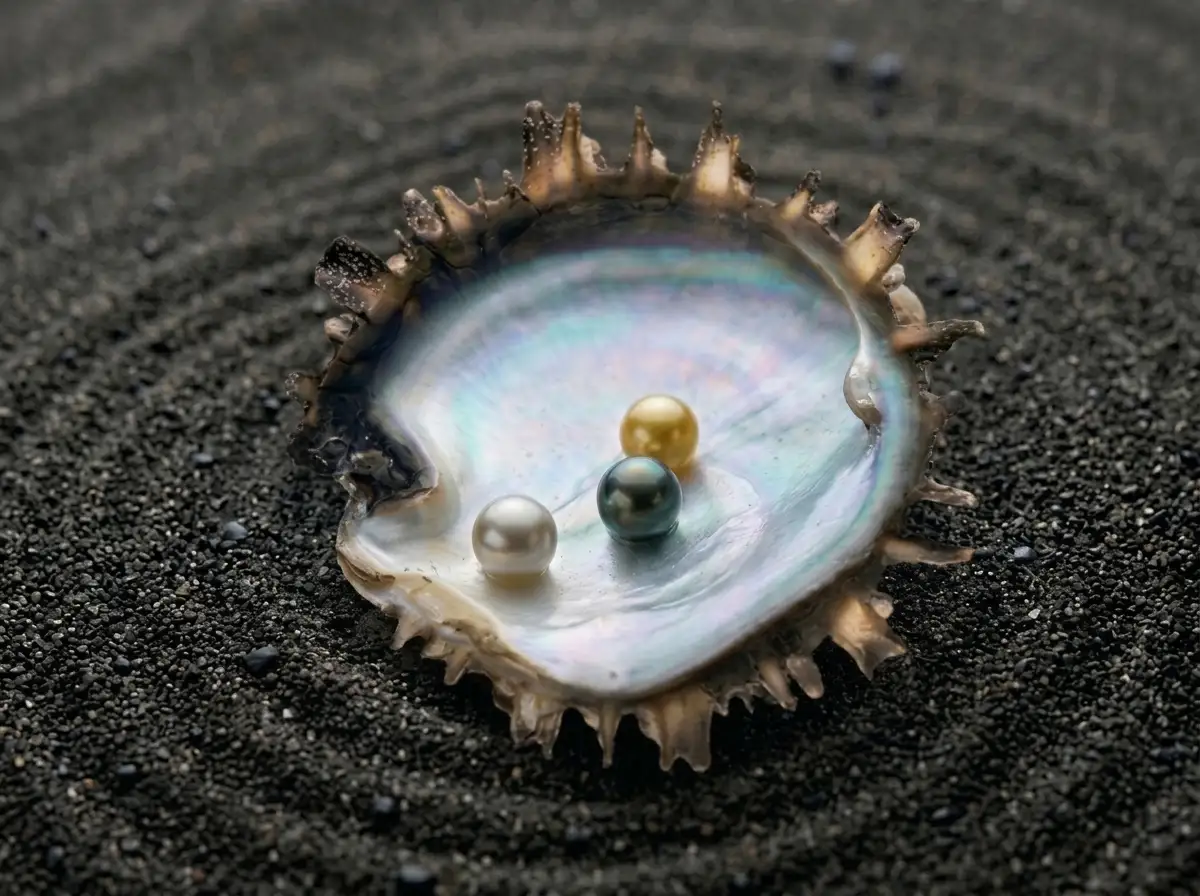
The Tahitian pearl grows in the black-lipped oyster (Pinctada margaritifera), in the heart of the lagoons of French Polynesia. It is mainly cultured in the Tuamotu and Gambier archipelagos, the main production areas, and also in the Leeward Islands.
Its beauty lies in the range of its colors: from white to charcoal gray, with magnificent green, blue or eggplant overtones. Some pearls also show precious golden shades, known as "gold."
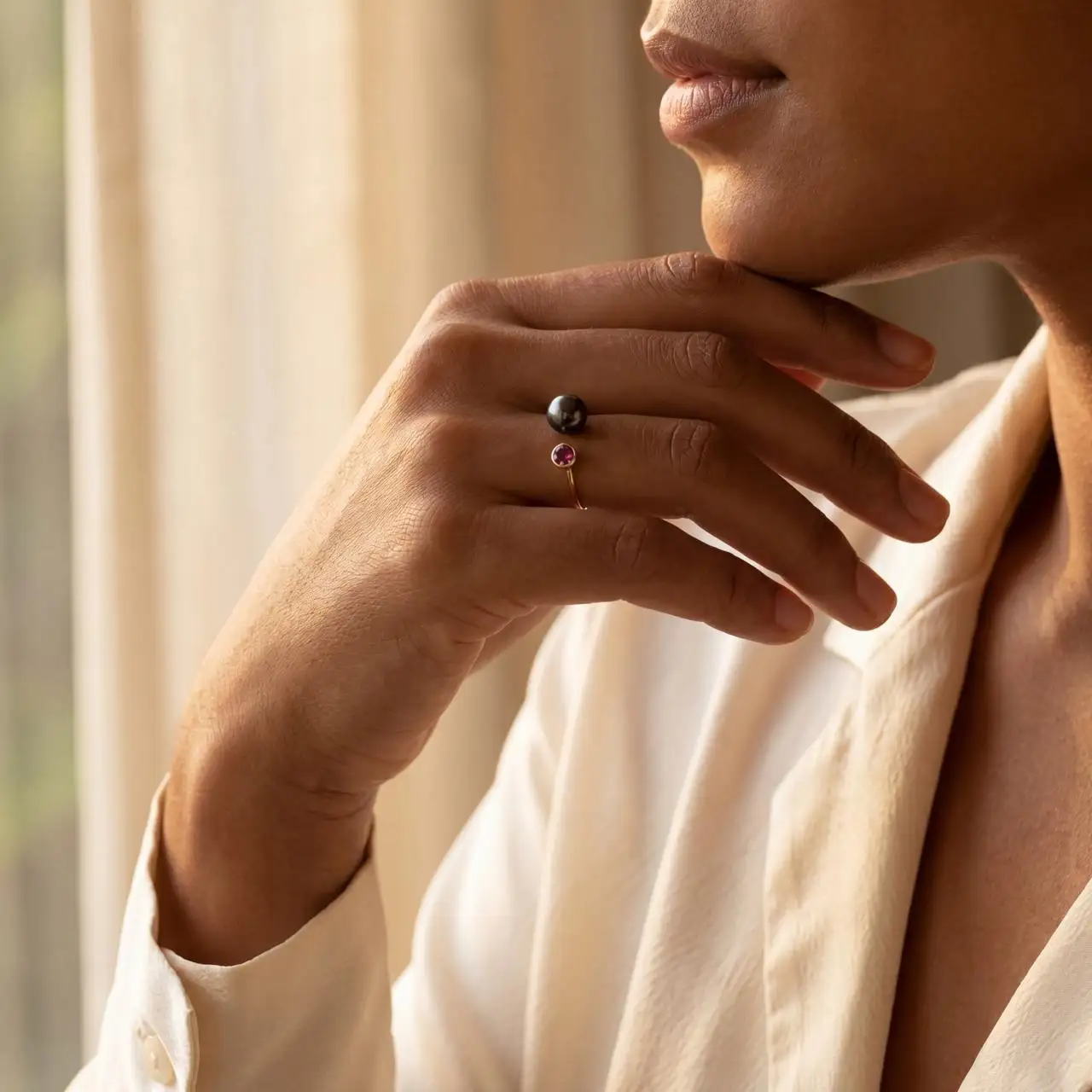
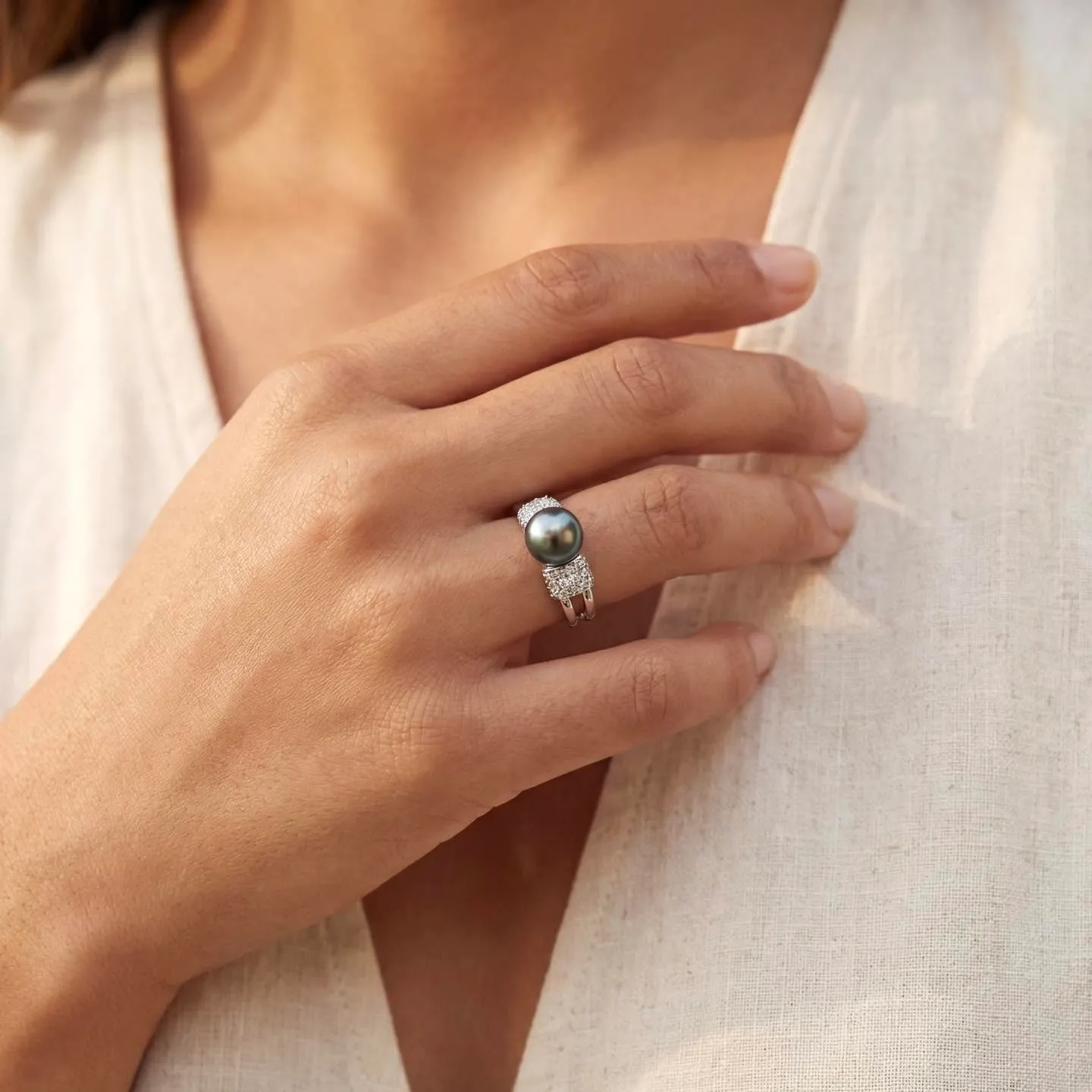
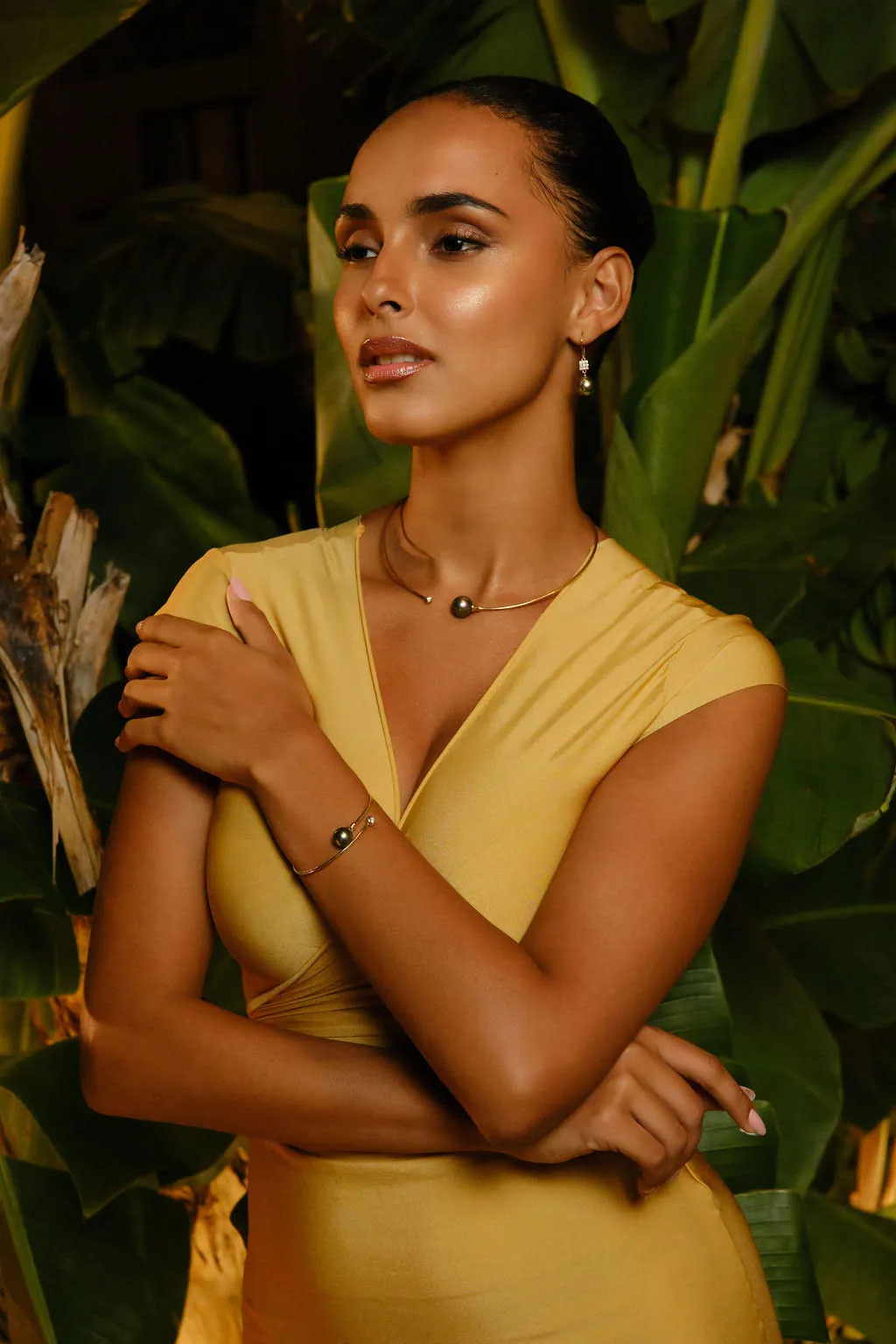
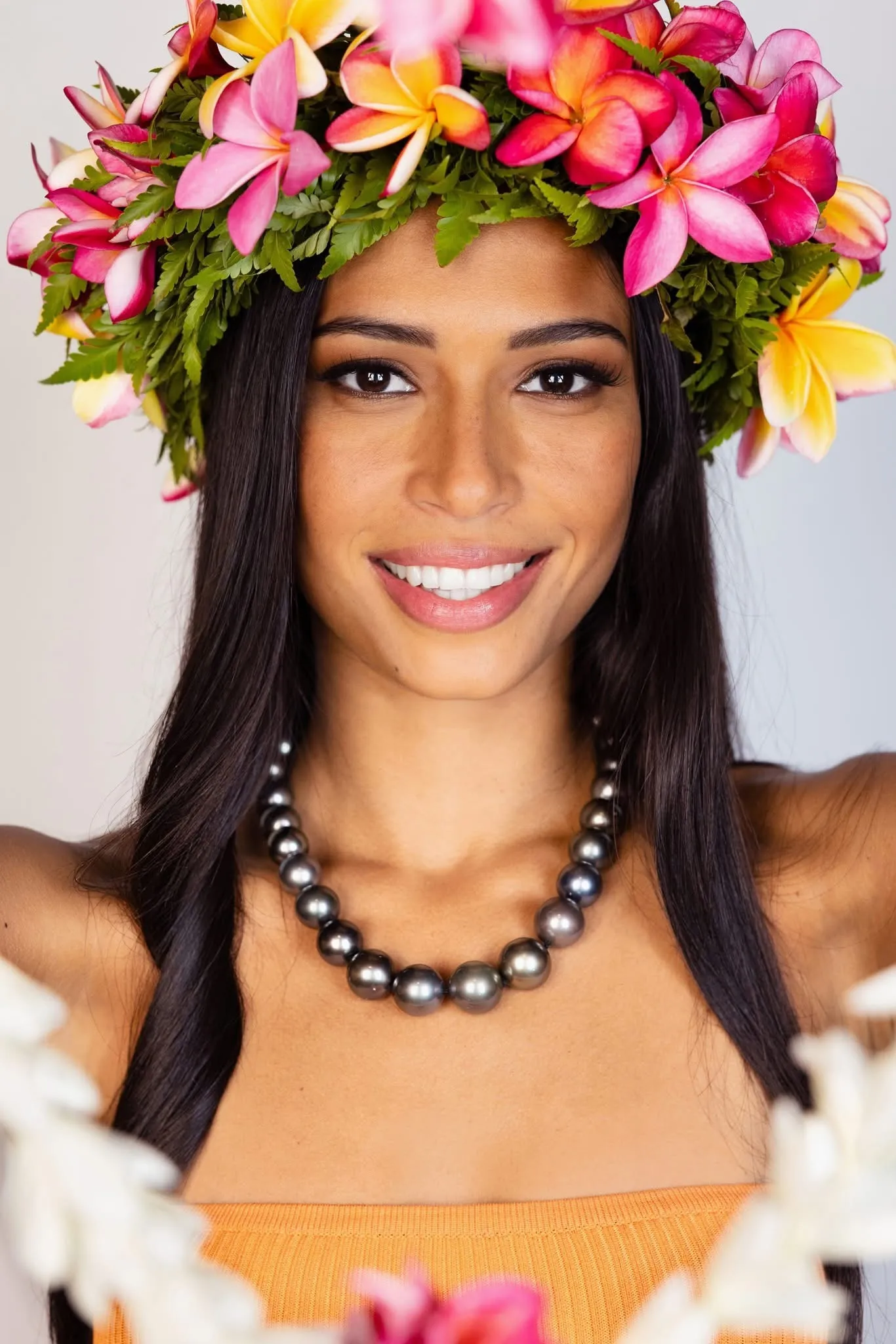
At Arl Luc in Papeete, we celebrate this Polynesian wonder through a selection of Tahitian pearl jewelry: rings, pendants, necklaces, bracelets and earrings.

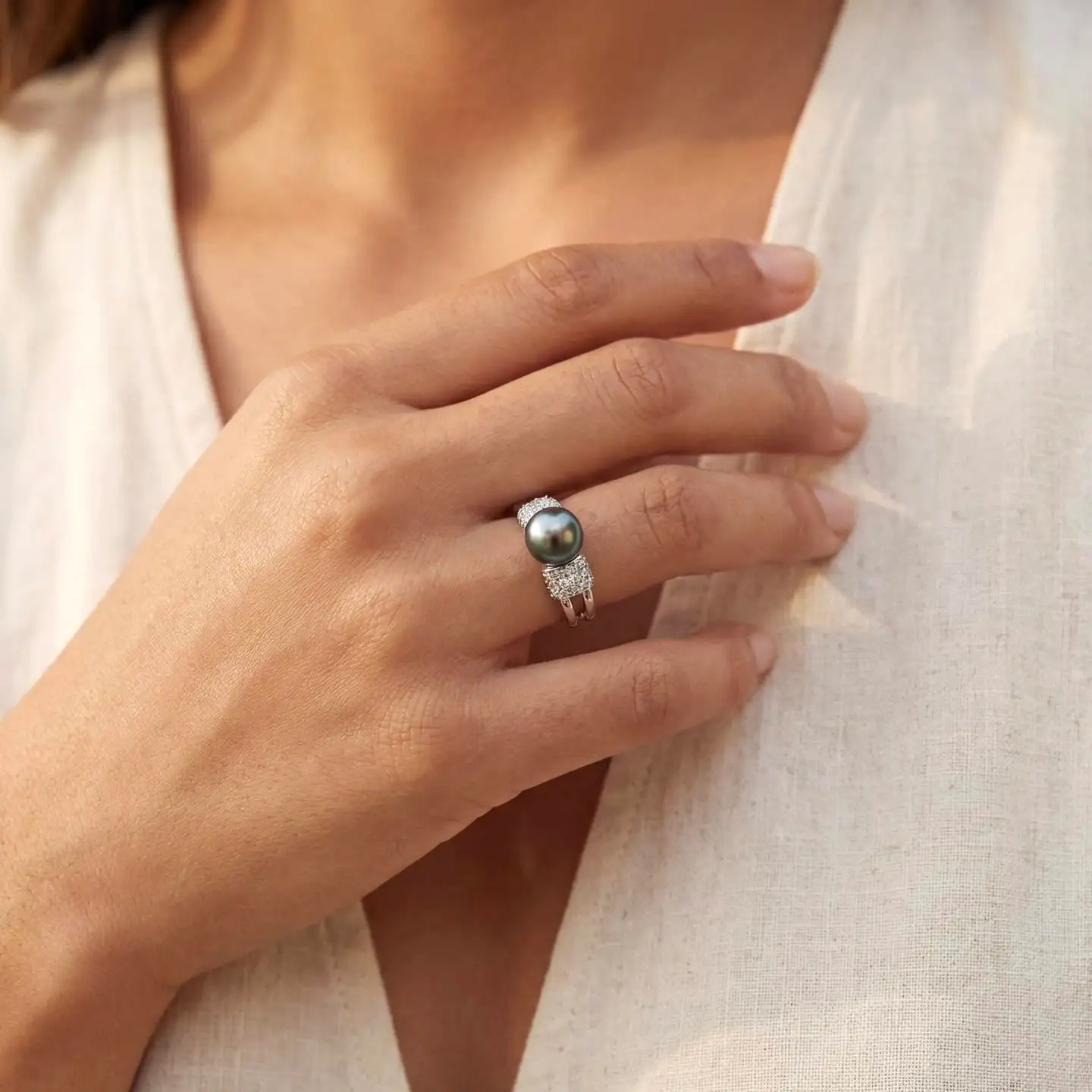
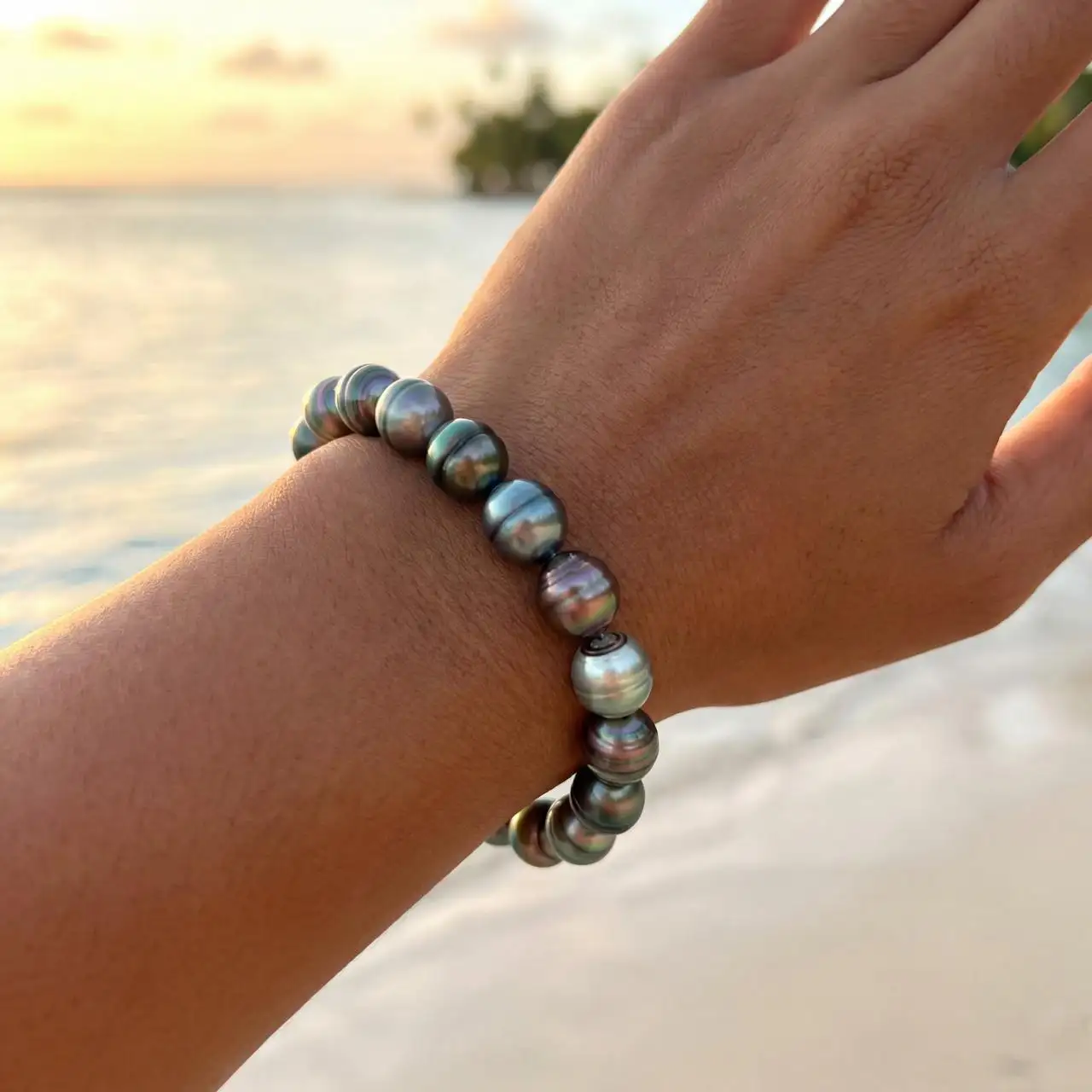
In Papeete, take the time to choose
At the boutique, in the Quartier du Commerce, we show you our Tahitian pearl jewelry and take the time to listen to you.
We guide you toward the piece that suits you. Our gallery shows a few examples.
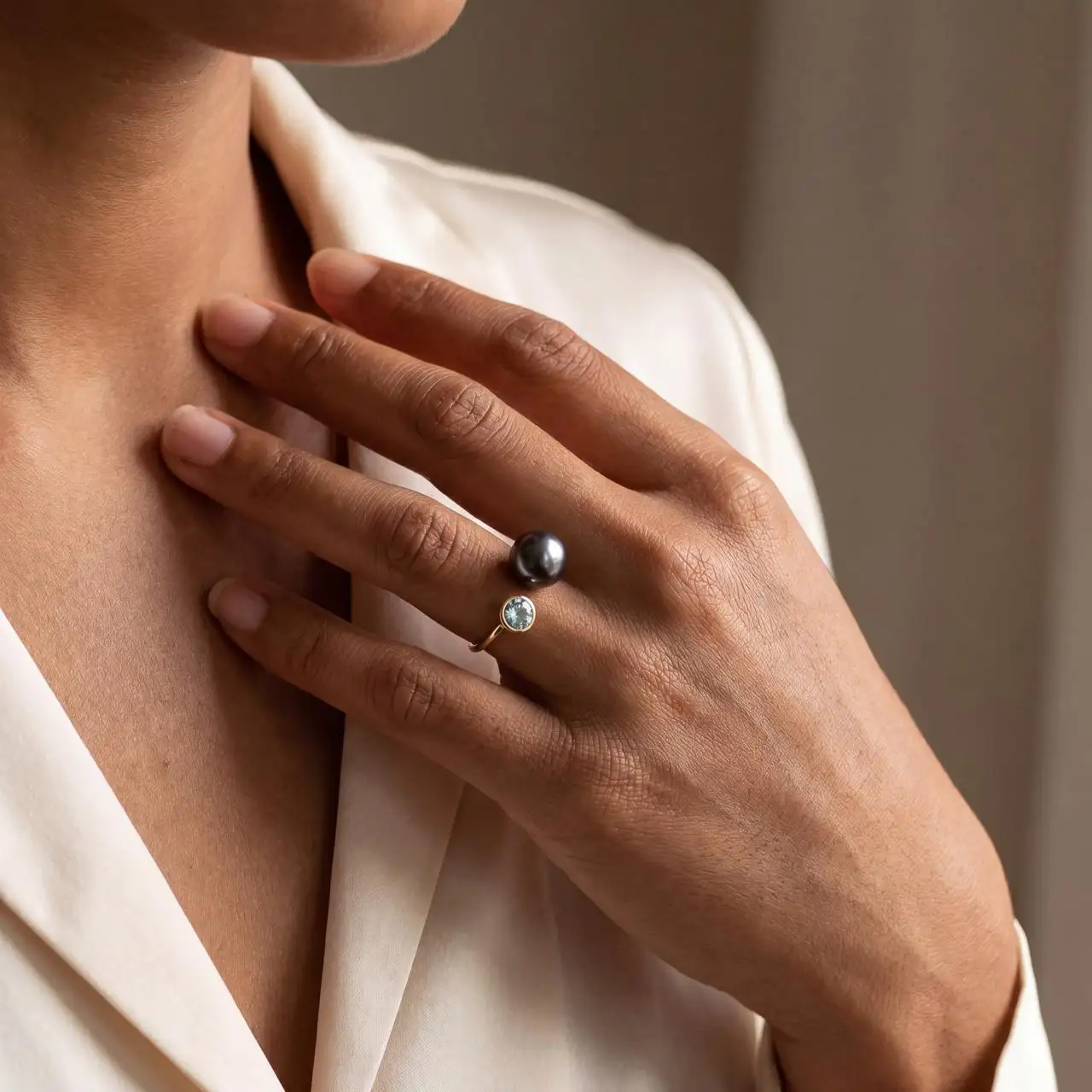
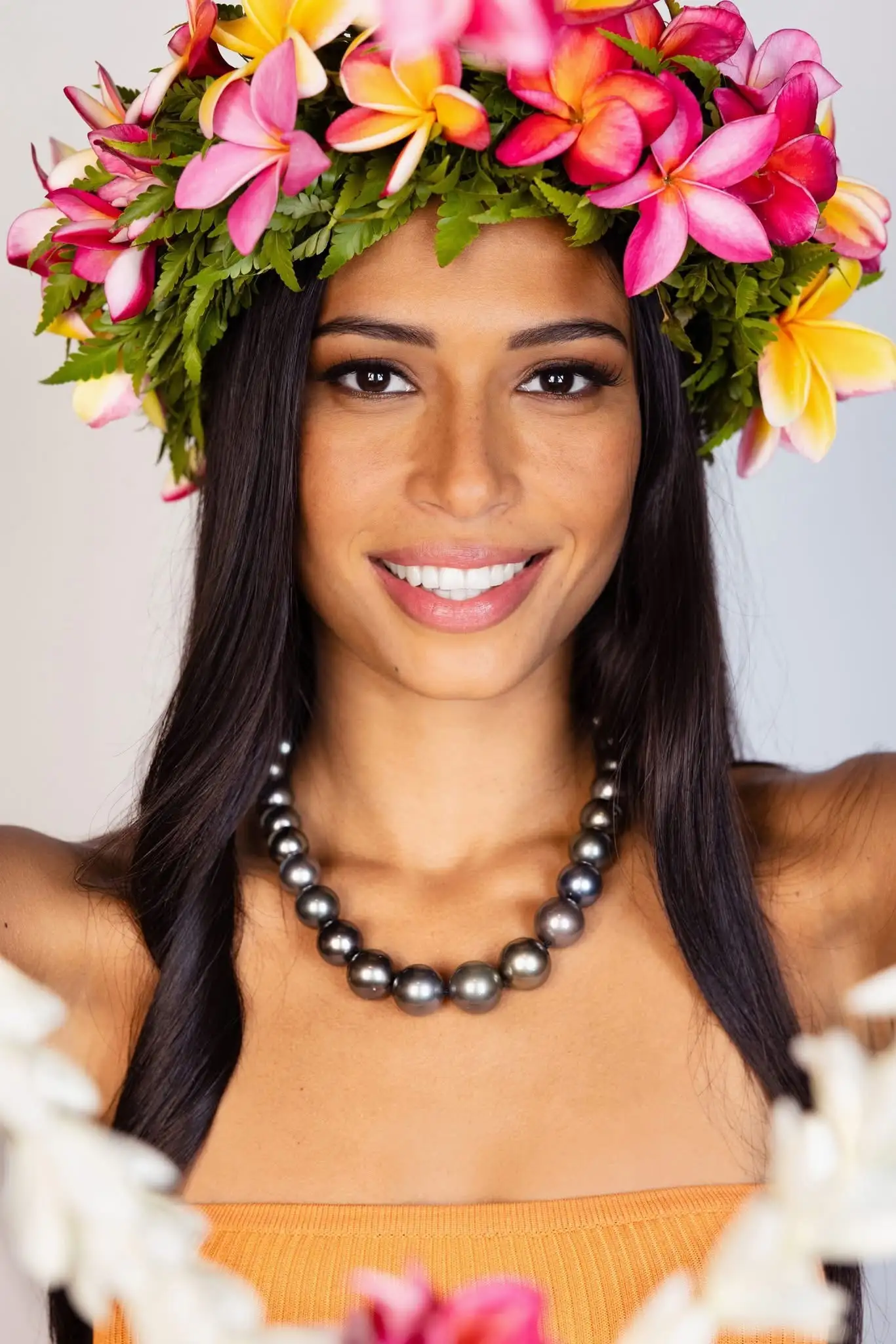
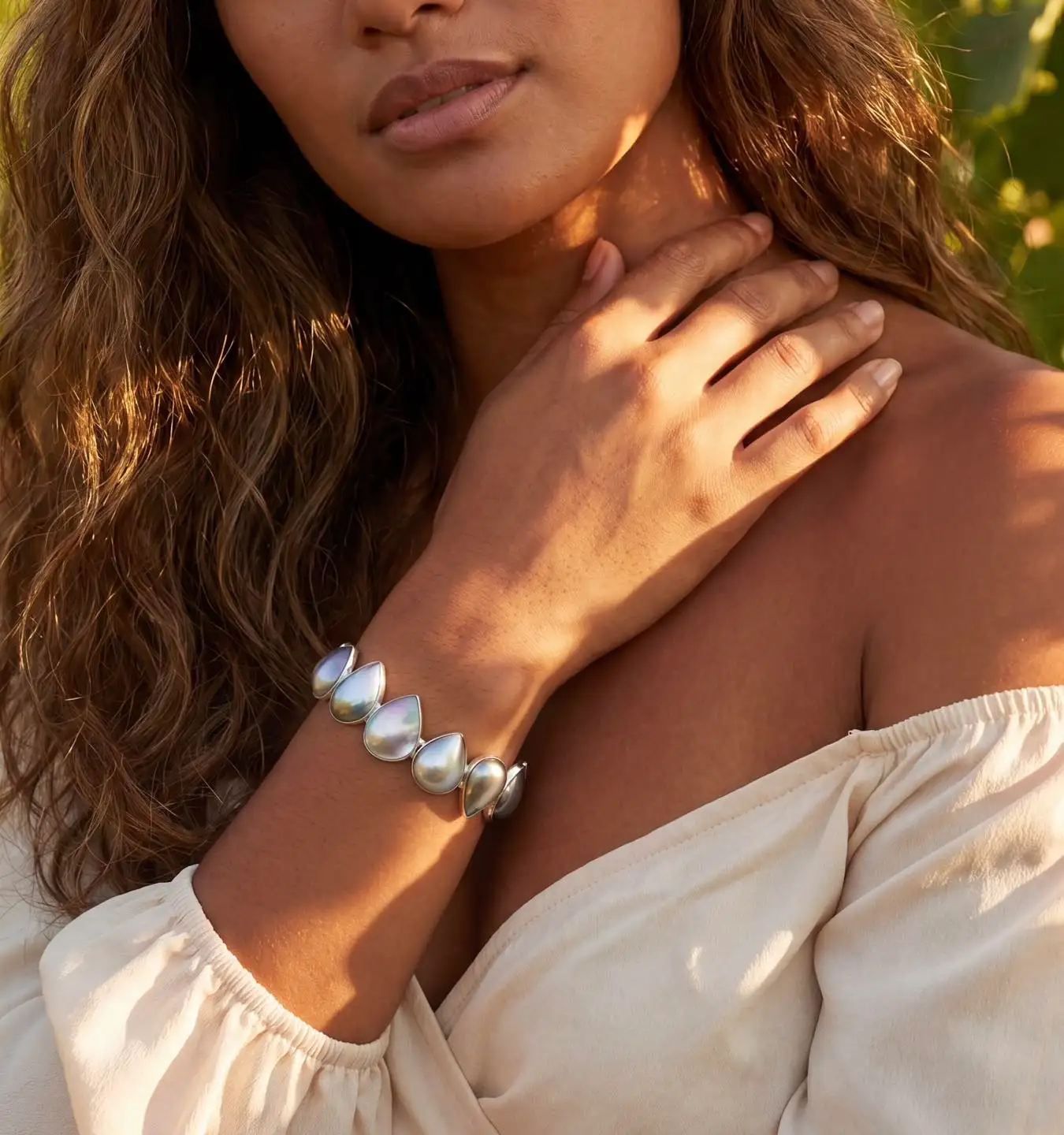
Every Tahitian pearl bought at our boutique comes with its certificate of authenticity.
A palette of natural shades
Often called "black pearls," Tahitian pearls come in a wide range of shades and overtones. Discover five of them in our Painapearl collection.
Hover over or click a pearl to discover its shade Tap a pearl to discover its shade
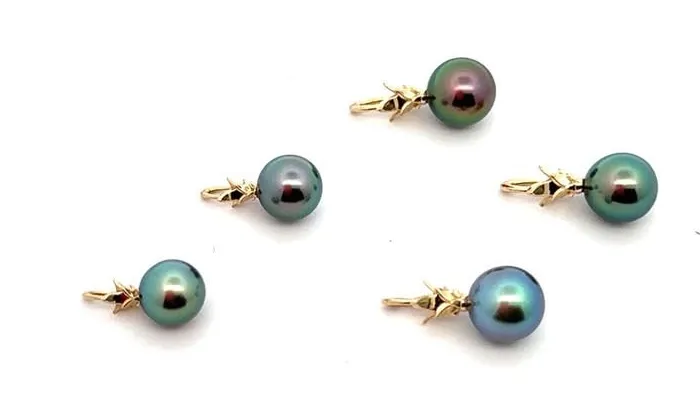
- ShadePeacock
A dominant green with eggplant overtones, sometimes with hints of blue or pink.
- ShadeSilver gray
A light, luminous gray shot through with green overtones.
- ShadeEggplant
A deep plum heart edged with green overtones.
- ShadeBluish
A blue-gray with the overtones of a lagoon.
- ShadeGreen
A rich green with a darker heart.
Pearls chosen with care
Our Tahitian cultured pearls come from Rikitea, in the Gambier archipelago, and from the Tuamotu. We select them with care and keep only quality pearls, for their color, their luster and their overtones.
When the time comes to create, I always start from the pearl. Its shape, its color and its overtones inspire me and guide my choices as I imagine the setting that will show it off best.
This is the full expertise of my workshop: the pearl leads, and the jewelry follows. The Painapearl collection is a fine illustration: the same setting, yet each pearl reveals its own personality. No two pearls are alike; each one is unique.
How to read a Tahitian pearl
Five criteria help you read a pearl: luster, surface quality, shape, size, often between 8 and 16 mm, and color. For surface, the Direction des ressources marines (Marine Resources Department) uses a scale from "Top Gemme" (Top Gem) to "E". Labels such as AAA or AA+ are commercial scales, with no official grading.
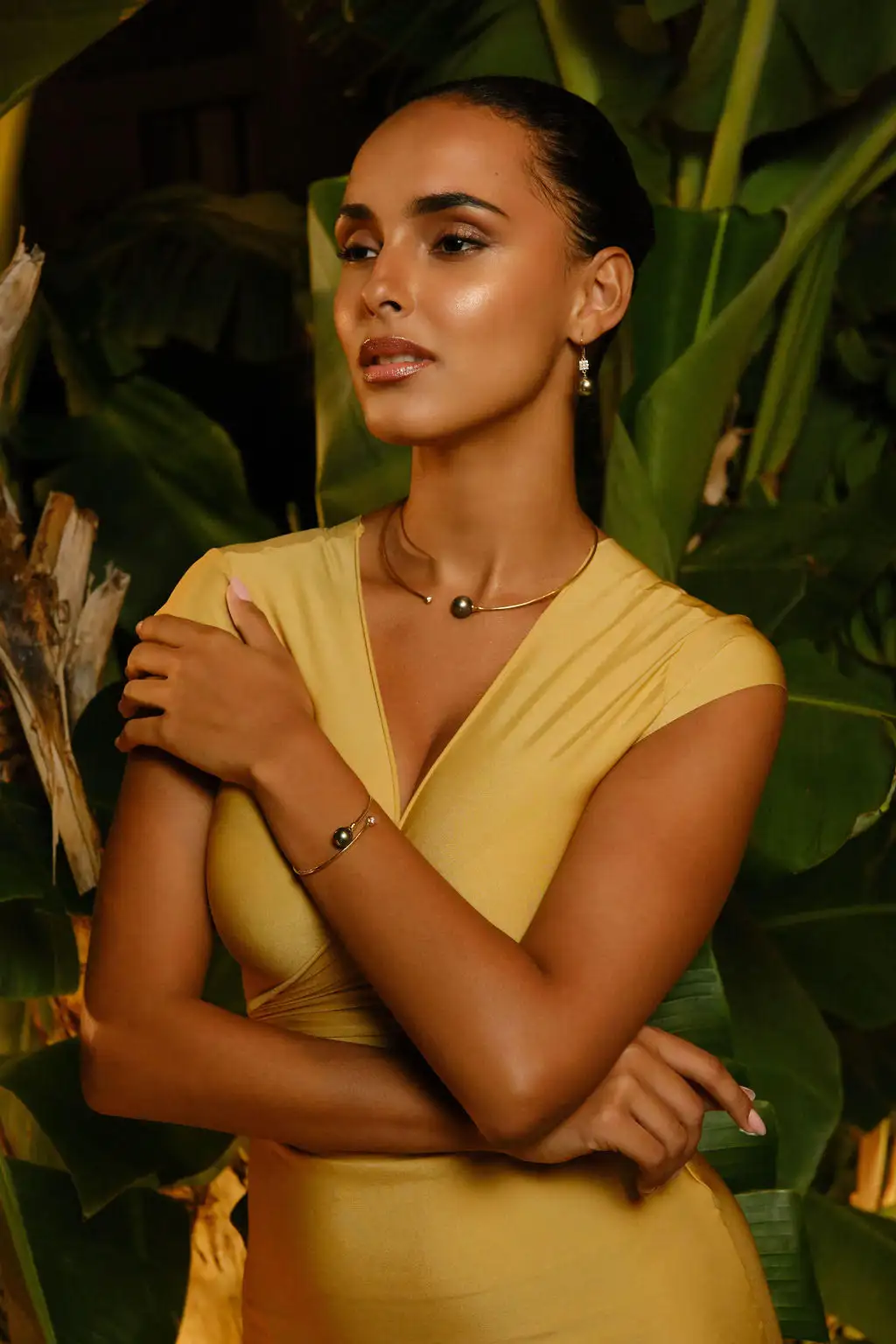
Rings, necklaces, bracelets, earrings
The Tahitian pearl finds its place in many jewelry creations: rings, pendants, earrings, bracelets, necklaces and even cufflinks. It is most often drilled, then fixed on a post with a two-part adhesive.
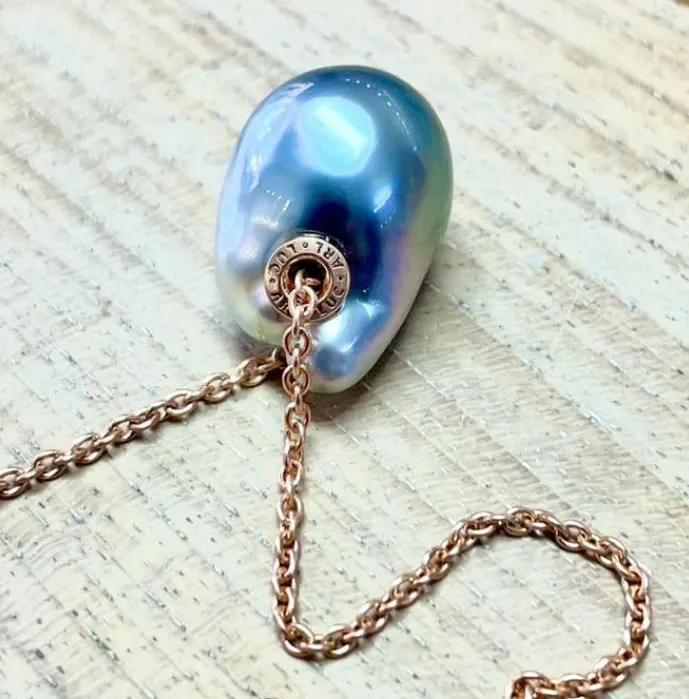
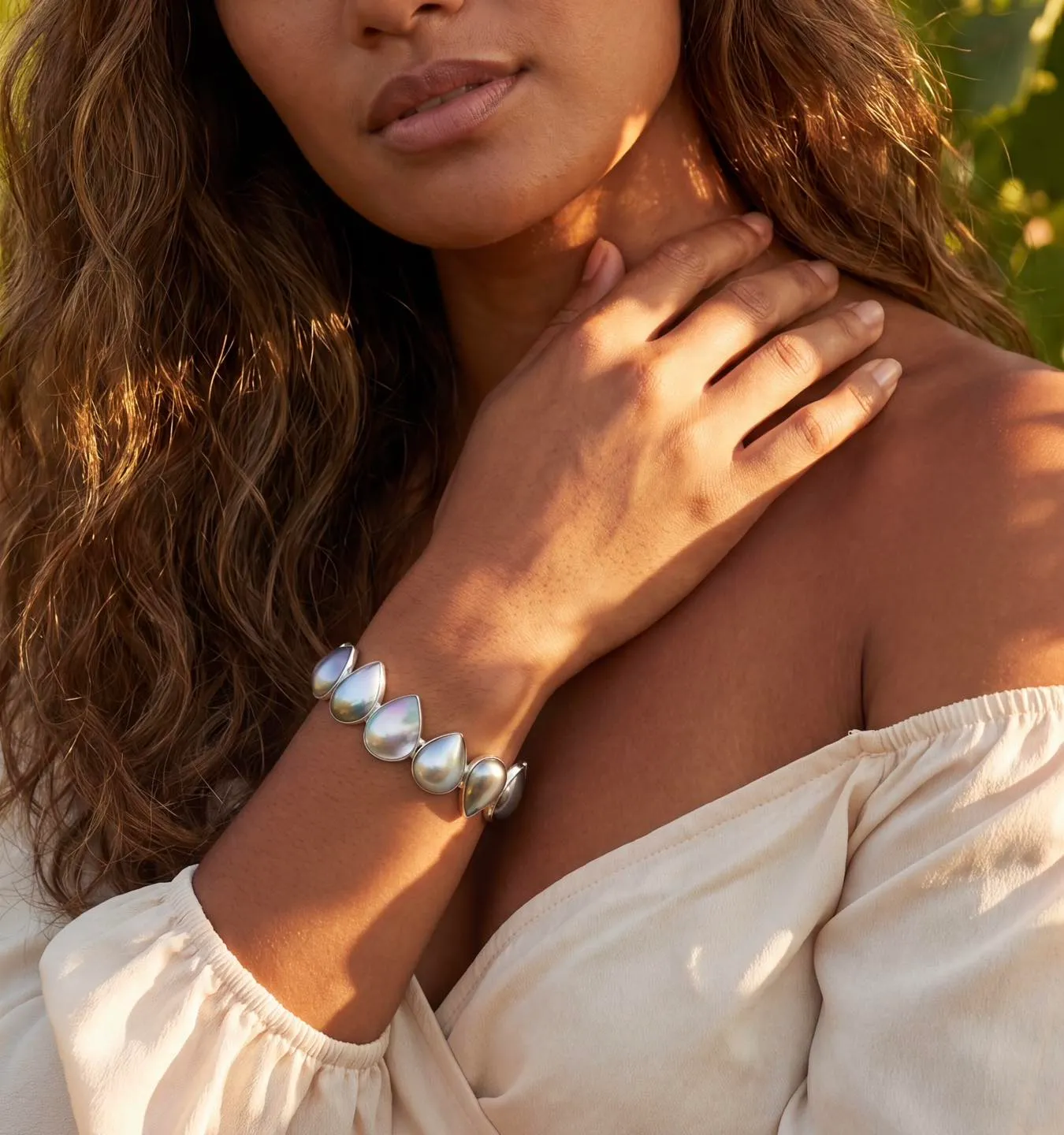
Less known to the general public, baroque and circled pearls are especially sought after by connoisseurs. The same goes for mabé and keshi pearls, whose shapes and distinctive features lend themselves particularly well to pieces with character.
Symbolism - Legends and symbols
Legend has it that the god Oro came down on a rainbow to give a black pearl to Hina.
Our Tahitian pearl jewelry
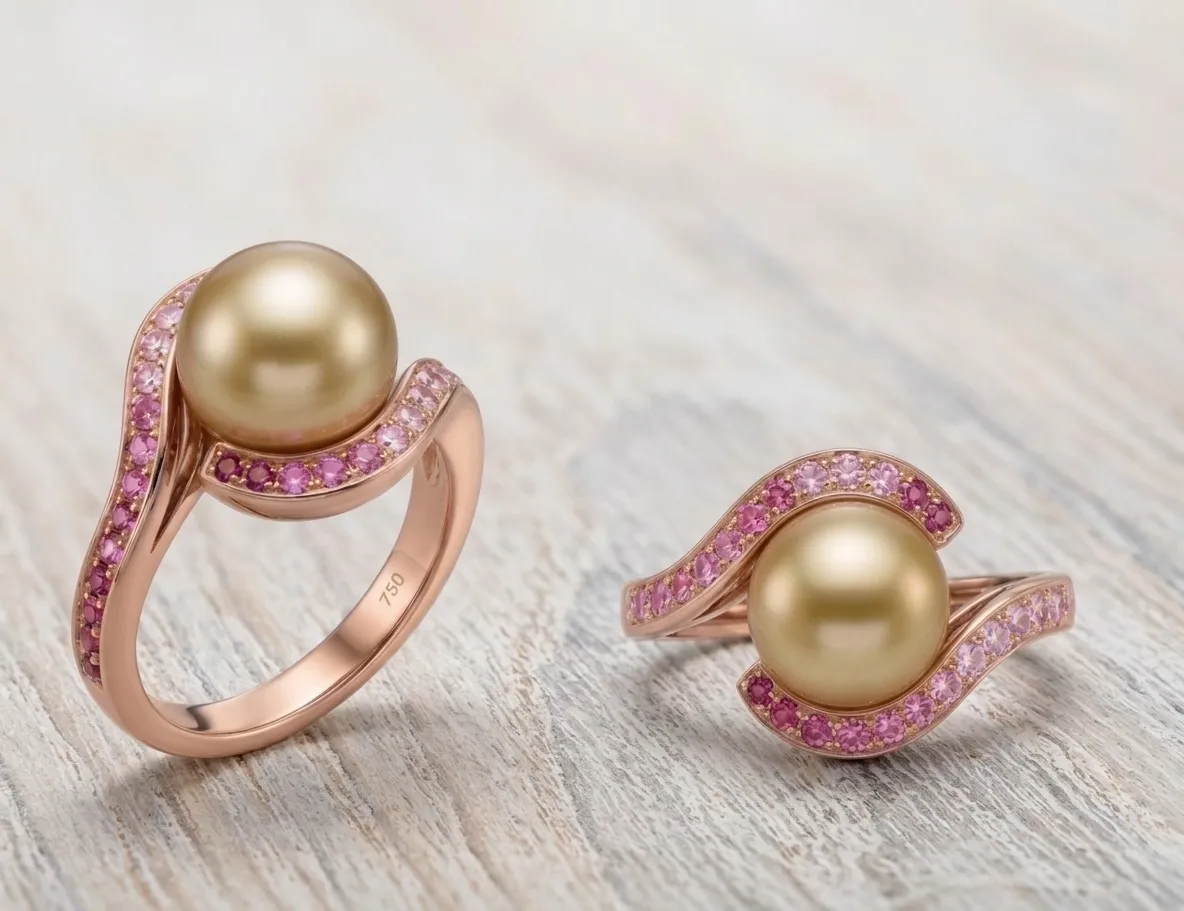
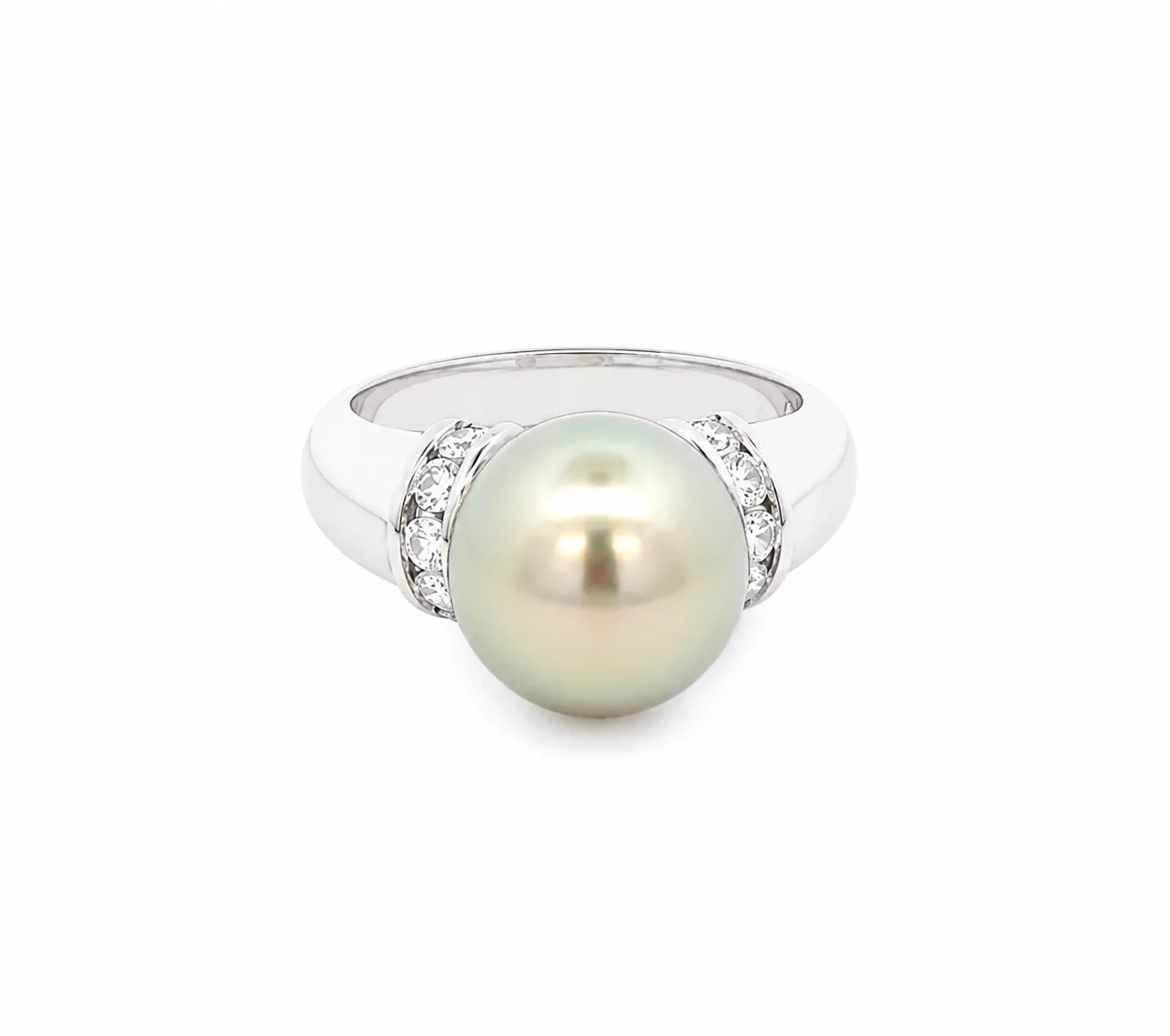
A few creations from the workshop: click a photo to take a closer look.

Tahitian pearls: your questions
What is a genuine Tahitian pearl?
The Tahitian cultured pearl is produced in French Polynesia by the pearl oyster Pinctada margaritifera, also known as the black-lipped oyster.
It forms through a procedure called grafting, in which a pearl farmer places a nucleus and a small piece of tissue inside the oyster. The oyster then gradually deposits layers of nacre around the nucleus to form the pearl.
A cultured pearl is a genuine pearl. It differs from a natural pearl only in the human intervention that starts its formation.
Are all Tahitian pearls black?
No. Although they are commonly called "black pearls," Tahitian pearls come in a wide range of natural colors.
Their shades can be gray, silver, green, bluish, brown or eggplant, sometimes with lighter tones and multicolored overtones.
Each pearl has its own combination of body color and secondary overtones, which is part of what makes it one of a kind.
What is the difference between a Tahitian pearl and a freshwater pearl?
The main difference is where they come from and the mollusk that produces them.
The Tahitian pearl is a saltwater cultured pearl, produced in French Polynesia by the Pinctada margaritifera oyster. It is notably known for its wide range of natural colors and overtones.
Freshwater pearls are generally produced by pearl mussels living in lakes, rivers or ponds. Their colors, shapes and structure are different.
Both are genuine cultured pearls, but their origin and the way they are produced differ.
Where do the Tahitian pearls selected by Arl Luc come from?
We select Tahitian cultured pearls from, among other places, Rikitea in the Gambier archipelago and the Tuamotu, in French Polynesia.
Our selection takes several characteristics into account: luster, surface quality, color, shape and the overall harmony of the pearl.
We favor pearls whose qualities suit the jewelry we offer or make in our workshop in Papeete.
What are the quality criteria for a Tahitian pearl?
The quality of a Tahitian pearl is judged on several criteria:
- Luster: the intensity and sharpness of the light reflected from its surface.
- Surface quality: the presence, extent and distribution of blemishes.
- Shape: round, semi-round, oval, drop, baroque or other.
- Size: the diameter of the pearl, measured in millimeters.
- Color: its dominant shade and any secondary overtones.
Luster and surface quality play a central role in the grading of Tahitian pearls.
Still, a pearl should always be judged as a whole. Its beauty and value never depend on a single criterion.
What shapes and sizes do Tahitian pearls come in?
Tahitian pearls come in many shapes: round, semi-round, oval, button, drop, circled, semi-baroque and baroque.
They usually measure between 8 and 16 mm in diameter, although some are smaller and others reach exceptional sizes, sometimes over 18 mm.
Round pearls are especially sought after for their regularity. Baroque pearls, with their irregular shapes, are also prized for the creative possibilities they offer in jewelry design.
Shape alone does not determine a pearl's quality: a baroque pearl with remarkable luster can be more valuable than a round pearl of lower quality.
What do the Top Gemme, A, B, C, D and E grades for Tahitian pearls mean?
The Polynesian grading system rates the surface quality and luster of Tahitian cultured pearls.
It sets out several categories:
- Top Gemme (Top Gem): a pearl with no surface blemishes and excellent luster.
- Grade A: a few very slight blemishes, with at least very good luster.
- Grade B: more numerous slight blemishes, with at least good luster.
- Grade C: more visible blemishes, with at least medium luster.
- Grade D: significant blemishes, with at least low luster.
- Grade E: a pearl that does not meet the criteria of the grades above.
This grading does not determine a pearl's value on its own. Size, shape, color and overtones also come into play.
What is the Peacock overtone on a Tahitian pearl?
The term Peacock refers to a combination of multicolored shades and overtones that is especially prized on some Tahitian pearls.
It is generally characterized by a dominant green with eggplant overtones, sometimes with hints of blue or pink.
The effect depends on how light interacts with the layers of nacre. It adds visual depth to the pearl and can influence its appeal and value.
Why are some Tahitian pearls more expensive than others?
The price of a Tahitian pearl depends on a combination of characteristics: its size, shape, luster, surface quality and colors.
A large round pearl with excellent luster and very few blemishes will generally be more sought after.
That said, a baroque pearl with exceptional overtones can also be highly valuable.
This is why two pearls of the same diameter can have very different prices. Evaluating a pearl means taking all of its characteristics into account.
How can you tell a genuine Tahitian pearl?
A dark color is not enough to identify a genuine Tahitian cultured pearl. Other types of pearls can look similar, naturally or after treatment.
Identification relies in particular on its gemological characteristics, information about its origin and the documents available.
At Arl Luc, every Tahitian pearl bought at the boutique comes with its certificate of authenticity.
Our team can also explain the characteristics of the pearl you choose.
Can I have a custom piece made with a Tahitian pearl?
Yes. Our jewelry workshop in Papeete makes custom pieces, including jewelry set with Tahitian pearls.
Depending on your project, we can help you choose a pearl and decide how best to showcase it in a ring, a pendant, earrings or another piece.
We guide you through the choice of materials, proportions and details so that the piece fits what you have in mind.
How do I care for a Tahitian pearl and keep its luster?
Tahitian pearls can be worn often, as long as you take a few precautions to protect their nacre.
After wearing, gently wipe your pearls with a soft, clean cloth. For an occasional deeper cleaning, ask your jeweler for advice, especially for set pieces and strung necklaces.
Avoid contact with perfume, cosmetics, detergents and chlorinated water. Never use an ultrasonic or steam cleaner.
Store your pearls apart from other jewelry, in a pouch or a soft compartment, to limit scratches and rubbing.
Have an idea in mind?
Stop by the boutique or write to us: we take the time to talk with you.